

On the French side: RE2020
Since 1 January 2022, the RE2020 environmental regulation has applied to detached houses. It judges a project on several indicators:
- Bbio, which measures the bioclimatic demand of the envelope,
- Cep, primary energy consumption,
- Ic énergie and Ic construction, the carbon footprint of the energy consumed and of the materials used,
- DH, degree-hours of discomfort during heat waves.
The carbon threshold tightens in steps, in 2025, 2028 and 2031: what passes narrowly today will not pass tomorrow.
On the Swiss side: SIA 380/1 and Minergie
The cantons apply the model energy regulations of the cantons (MoPEC), and the SIA 380/1 standard sets the permissible heating demand. The Minergie label, which is optional, comes in three levels:
- Minergie, the basic standard,
- Minergie-P, for a very high-performance envelope,
- Minergie-A, for a building whose production covers its consumption.
What energy-positive asks of the architecture
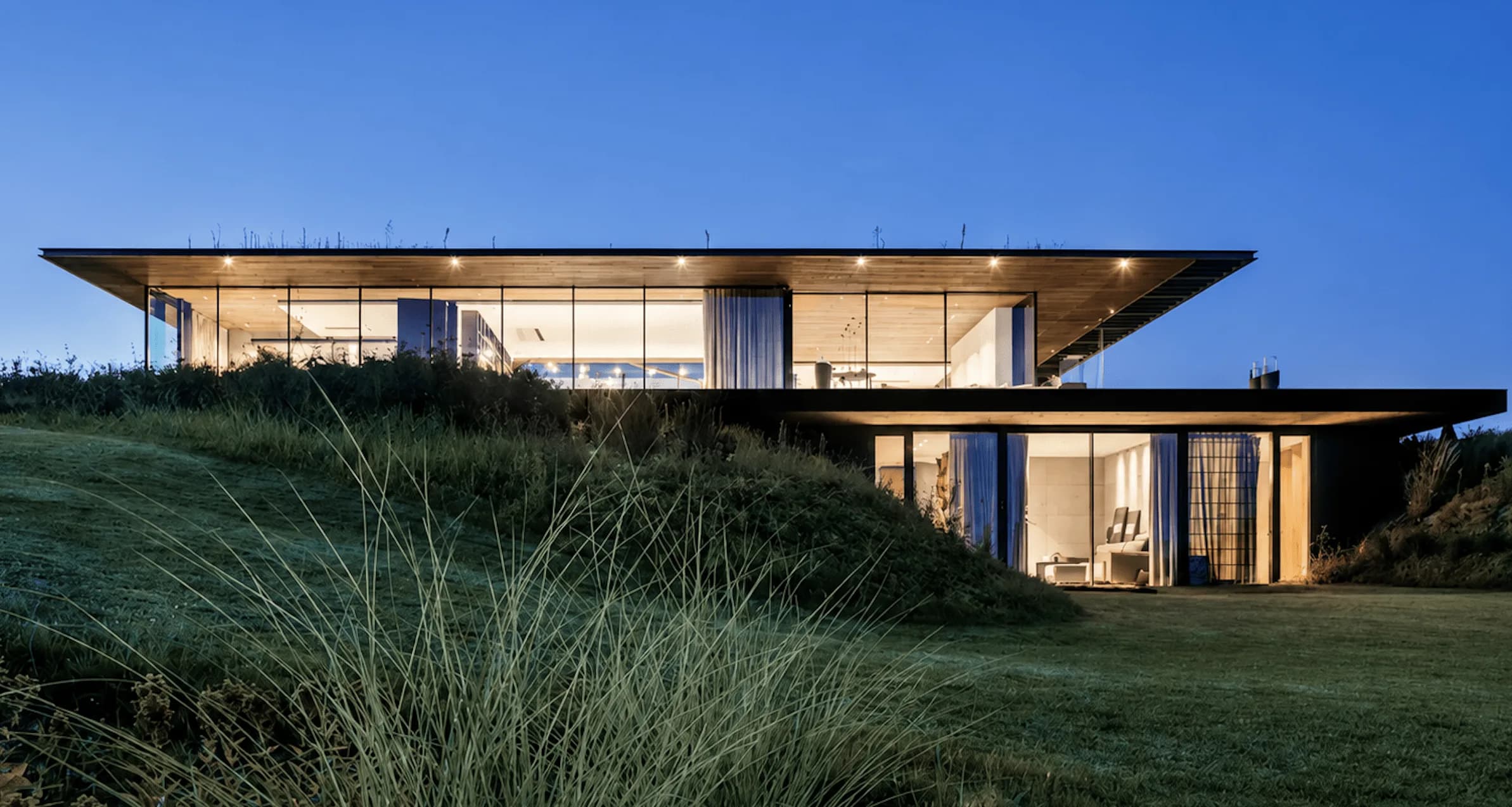
Performance begins with the envelope, before any equipment: continuous insulation, high-performance windows, the thermal mass of mineral materials, a living room facing south. Then come production — geothermal energy from probes or groundwater, a building-integrated solar roof — and ventilation.
The pitfall, on a prestige villa, is visible equipment. A building-integrated solar roof, with no panels added on top, is drawn into the very first sketch; added at the end, it shows.
“A solar roof is drawn into the first sketch. Added at the end, it shows.”
What we learned on the Lake Geneva arc
Our energy-positive villa on the Lake Geneva arc was designed to meet both frameworks, RE2020 and SIA 380/1. Groundwater geothermal energy, a 40 kWp building-integrated solar roof, an earth-air heat exchanger: it showed a positive energy balance after twelve months and was handed over four days ahead of the contractual date.
How we work
We have the envelope checked by the thermal engineers from the sketch stage, before choosing the equipment, and we integrate energy production into the architecture rather than adding it on. For a client hesitating between the two shores, we compare both frameworks on the same brief.